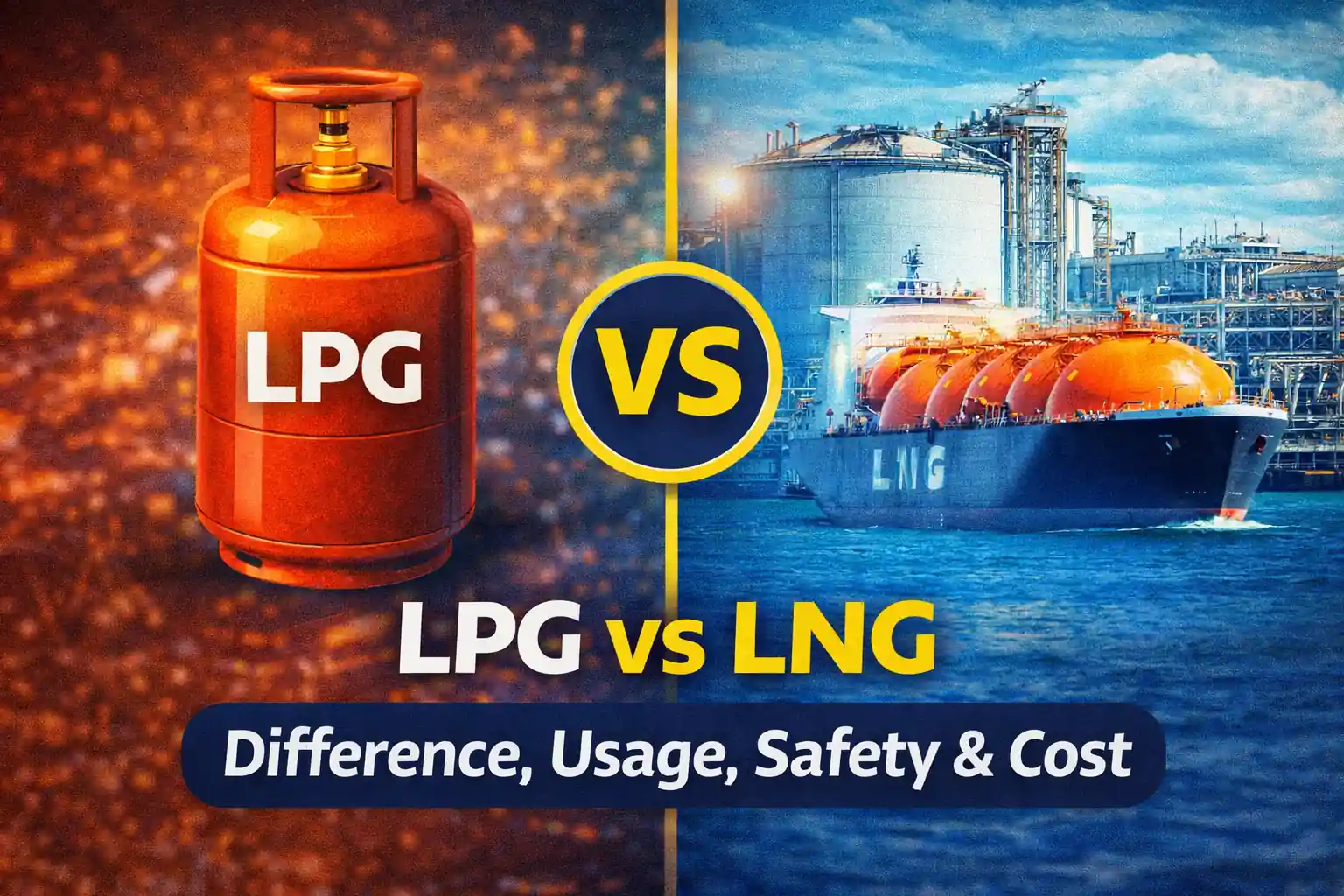
LPG (Liquefied Petroleum Gas) is one of the most commonly used fuels for cooking and heating. But have you ever wondered how LPG gas is made?
🛢️ Where LPG Comes From
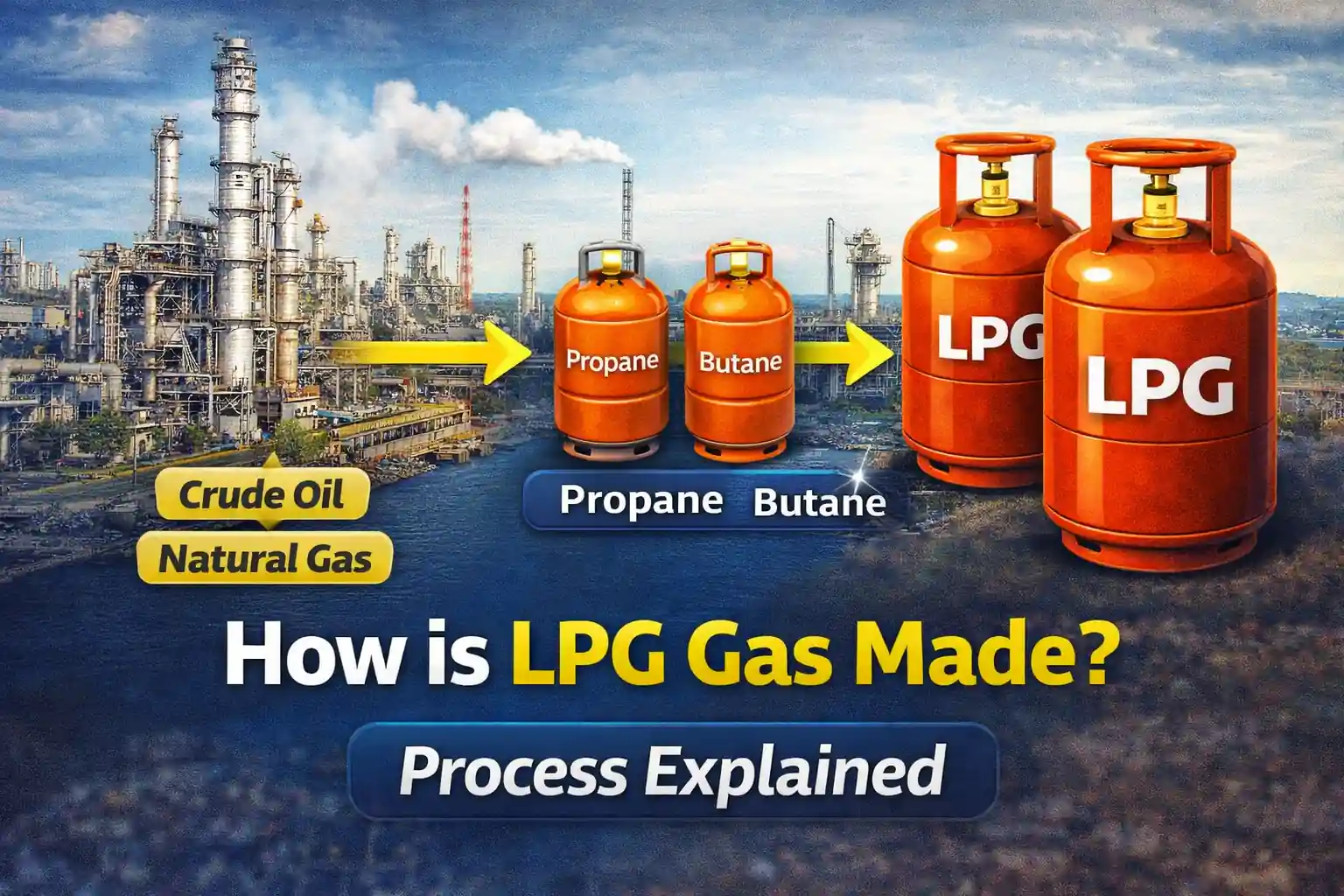
LPG is mainly produced from two sources:
- Crude oil refining
- Natural gas processing
👉 It is not created separately — it comes as a byproduct during these processes.
⚙️ How LPG is Made (Step-by-Step)
1. Extraction
Crude oil or natural gas is extracted from underground reserves.
2. Separation
At refineries or gas plants, different gases are separated.
👉 LPG mainly contains:
- Propane
- Butane
3. Liquefaction
The gas is compressed and cooled to turn it into liquid form.
👉 This makes it easy to store and transport in cylinders.
🚚 Storage & Distribution
Once LPG becomes liquid:
- It is filled into cylinders
- Transported via trucks or pipelines
- Delivered to homes and industries
🔥 Final Insight
LPG is not directly “manufactured” — it is a byproduct of oil and gas processing. After refining and compression, it becomes the clean fuel we use daily.
👉 That’s why LPG is widely available and efficient.
❓ FAQs
LPG is a natural byproduct of crude oil and natural gas processing.
Mainly propane and butane.
To make storage and transport easier.
Yes, when handled properly.
In oil refineries and gas processing plants.