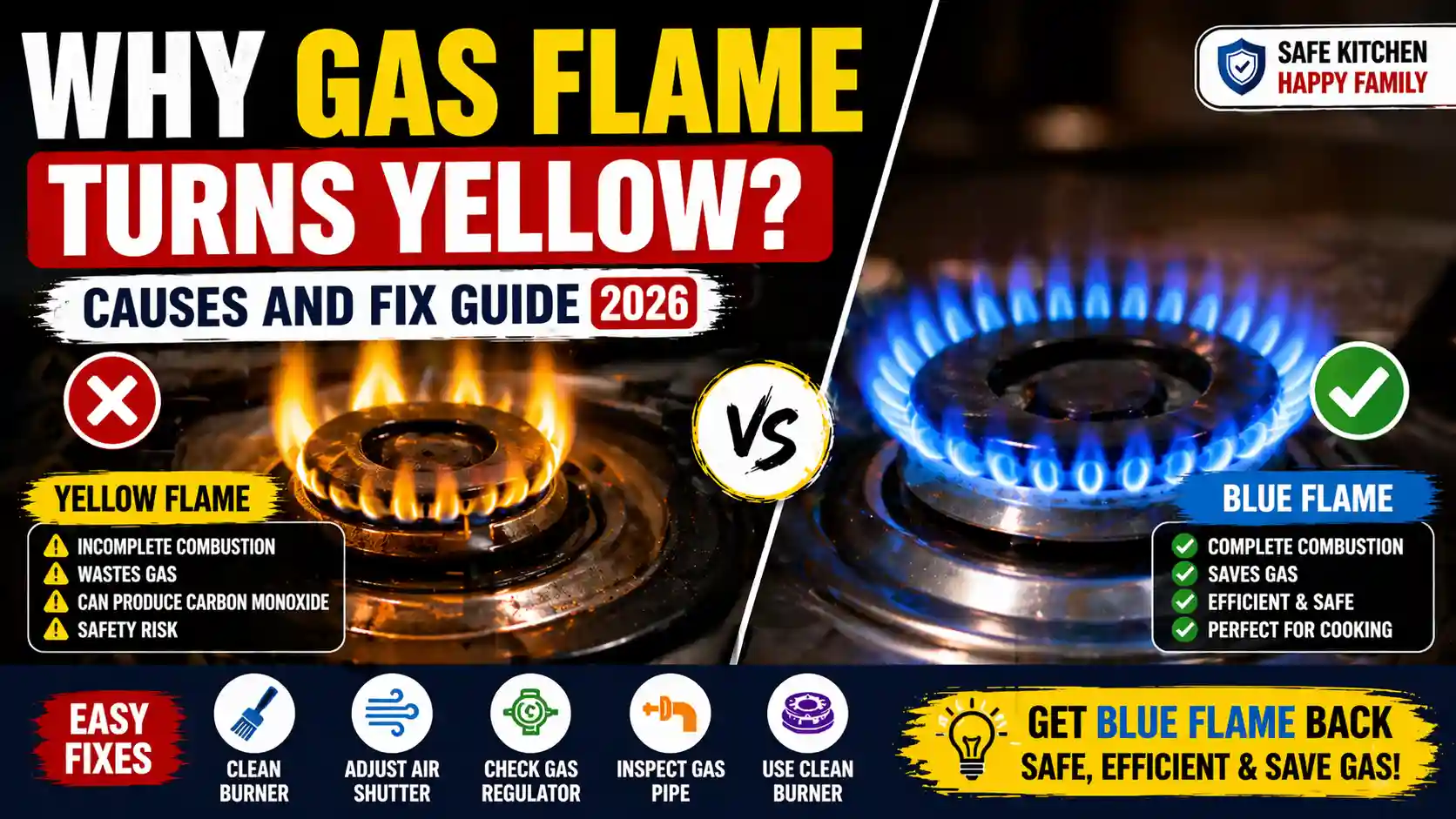
If you have noticed a gas flame yellow instead of blue, it is a clear sign that something is wrong with your gas stove or LPG supply. Normally, a healthy LPG flame should be blue. A yellow flame indicates incomplete combustion, which can reduce efficiency and even become dangerous.
In this guide, you will learn the exact reasons behind the gas flame yellow problem and how to fix it easily at home.
🔥 What Does a Yellow Gas Flame Mean?
A gas flame yellow means that the gas is not burning completely. This usually happens due to lack of oxygen or dirt in the burner.
👉 Blue Flame = Complete combustion (safe and efficient)
👉 Yellow Flame = Incomplete combustion (unsafe and wasteful)
When the flame turns yellow, it can produce carbon monoxide, which is harmful if inhaled.
⚠️ Common Causes of Gas Flame Yellow
1. Dirty Burner Holes
One of the most common reasons for a gas flame yellow is clogged burner holes.
- Dust, oil, and food particles block the gas flow
- Air supply gets restricted
- Flame turns yellow instead of blue
2. Improper Air-Gas Mixture
Gas stoves require a proper mix of air and LPG.
- Less air = yellow flame
- More air = unstable flame
If the air shutter is not adjusted correctly, the gas flame yellow issue appears.
3. Low Gas Pressure
Sometimes the problem is not in the stove but in the cylinder.
- Low LPG pressure
- Faulty regulator
- Nearly empty cylinder
👉 You can also check related issues here:
Read also: LPG Gas Cylinder Home Delivery Status Check
4. Blocked Gas Pipe or Nozzle
A blocked gas pipe can disturb the gas flow.
- Dust inside pipe
- Oil blockage
- Insects entering nozzle
This leads to uneven burning and causes gas flame yellow.
5. Moisture or Rust in Burner
If your stove is old or exposed to water:
- Rust formation
- Moisture buildup
This affects combustion and creates a yellow flame.
🛠️ How to Fix Gas Flame Yellow Problem
✔️ Clean the Burner Properly
- Remove the burner
- Use a needle or brush to clean holes
- Wash and dry before reinstalling
✔️ Adjust Air Shutter
- Locate the air shutter below burner
- Slightly open it to allow more air
- Check flame color while adjusting
✔️ Check Gas Regulator
- Ensure regulator is working properly
- Replace if faulty
- Make sure it is tightly fitted
👉 Related guide:
Read also: Gas Regulator Change 2025
✔️ Inspect Gas Pipe
- Check for cracks or blockage
- Replace if damaged
- Clean nozzle regularly
✔️ Replace Old Burners
If your burner is too old, cleaning may not help.
- Replace with new burner
- Ensure compatibility with stove
🚨 Is Yellow Gas Flame Dangerous?
Yes, a gas flame yellow can be dangerous if ignored.
- Produces carbon monoxide
- Reduces cooking efficiency
- Can damage utensils
- Indicates potential leakage or blockage
👉 If you smell gas along with yellow flame, act immediately.
Read also: LPG Cylinder Explosion Safety Tips
💡 Tips to Maintain Blue Flame Always
- Clean burner weekly
- Keep stove dry
- Use good quality LPG regulator
- Avoid spilling food on burner
- Check gas pipe regularly
👉 You can also learn more safety tips here:
Read also: Best LPG Gas Safety Tips 2025
📊 Real Example
Many households face the gas flame yellow issue after cooking oily food. Oil spills into the burner holes and blocks airflow. After proper cleaning, the flame usually turns blue again.
❓ FAQs
It is usually due to incomplete combustion caused by dirty burners or improper air supply.
Yes, it can produce carbon monoxide and should be fixed immediately.
Yes, cleaning the burner and adjusting the air shutter usually solves the problem.
Yes, low pressure or nearly empty cylinder can cause uneven burning.
If cleaning does not fix the issue, replacing the burner is the best option.
📖 Read Also
1️⃣ LPG Gas Cylinder Price Today
2️⃣ Ujjwala Yojana जानकारी
3️⃣ KisanSuvidha Goverment Scheme
4️⃣ Bajrang Baan PDF – बजरंग बाण पाठ, लाभ और महत्व
5️⃣ Shiv Stuti Lyrics – शिव स्तुति का पाठ और अर्थ